
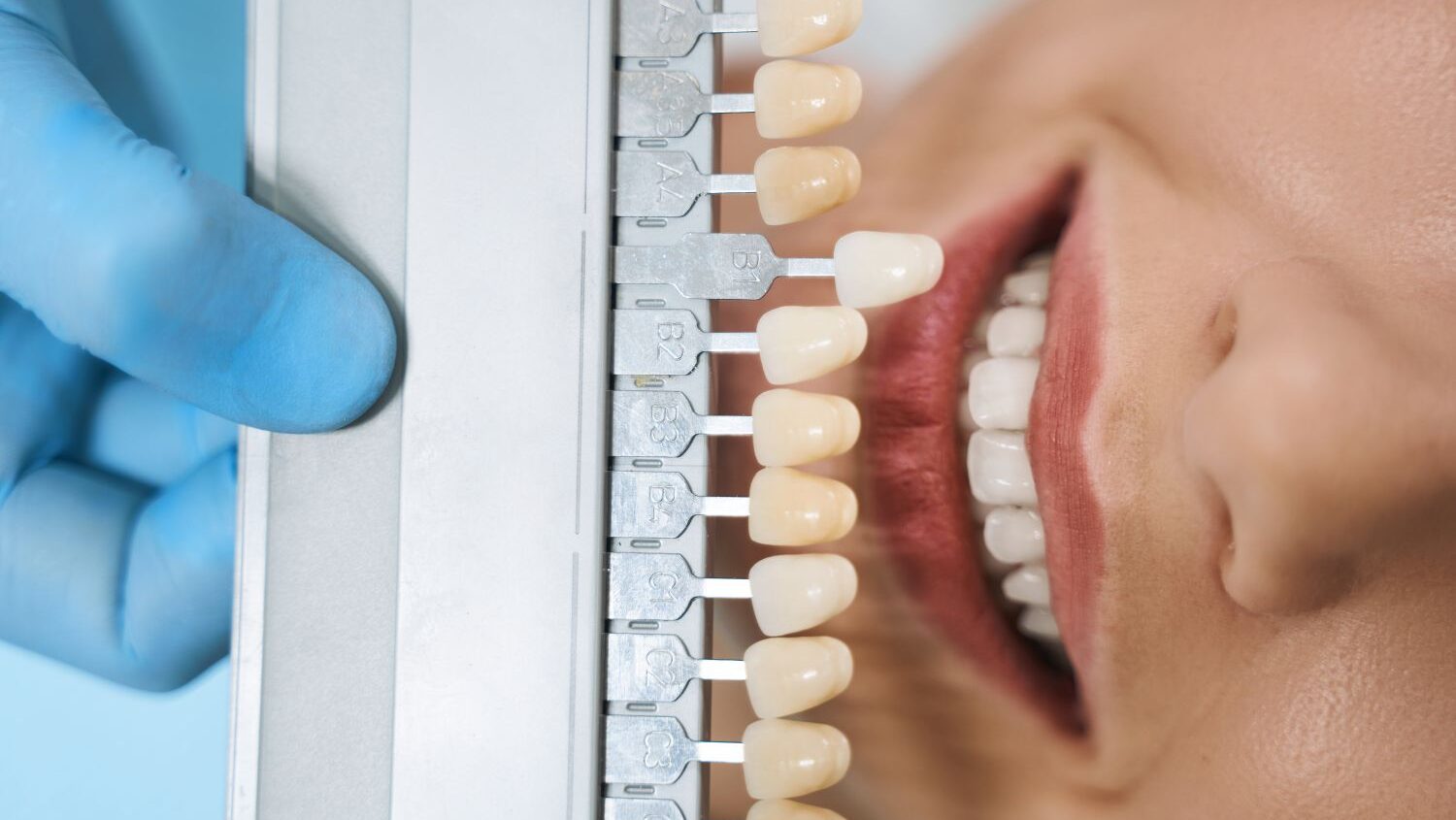
Porcelain veneers are thin, custom-made shells that cover the front of your teeth. They improve the colour, shape and overall appearance of your smile. Your dentist may suggest them if you live with chips, gaps, deep stains or worn edges that don’t respond well to whitening.
The aim is not a perfect Hollywood smile. We focus on a natural result that suits your face, your personality and the way you speak and laugh.
What are porcelain veneers?
Porcelain veneers, sometimes called porcelain laminate or ceramic veneers, are ultra-thin layers of medical-grade porcelain. Your dentist bonds them permanently to the front of your teeth. The porcelain mimics natural enamel with similar translucency and shine, so the veneers blend with the rest of your smile.
Dentists often use porcelain veneers to soften chips and cracks, close small spaces and disguise deep internal stains. Veneers also refine the shape or length of teeth. Unlike crowns, which cover the whole tooth, veneers usually cover only the front and a small edge. In many cases, your dentist can keep more healthy tooth structure.
This information is general and does not replace a full dental examination or personalised advice.
Who is porcelain veneers treatment for?
Porcelain veneers may suit you if you feel unhappy with the colour, shape or alignment of your front teeth. Many people choose them when whitening cannot improve deep discolouration. Others ask about veneers when several front teeth look chipped, worn or uneven.
You might be a good candidate if you have:
- deep intrinsic stains that do not respond to bleaching
- chipped or worn edges on several front teeth
- small gaps between teeth and prefer not to wear braces
- slightly crooked or misshapen front teeth that bother you in photos
Veneers can close small gaps without orthodontics. They can also hide mild misalignment when you prefer not to have braces. Before your dentist plans veneers, they check that your gums, bone support and teeth are generally healthy.
Veneers may not suit you if you have untreated tooth decay, active gum disease, very weak teeth, large fractures or severe bite problems. Only a dentist who examines you in person can confirm whether porcelain veneers are a safe and appropriate choice.
Benefits of porcelain veneers
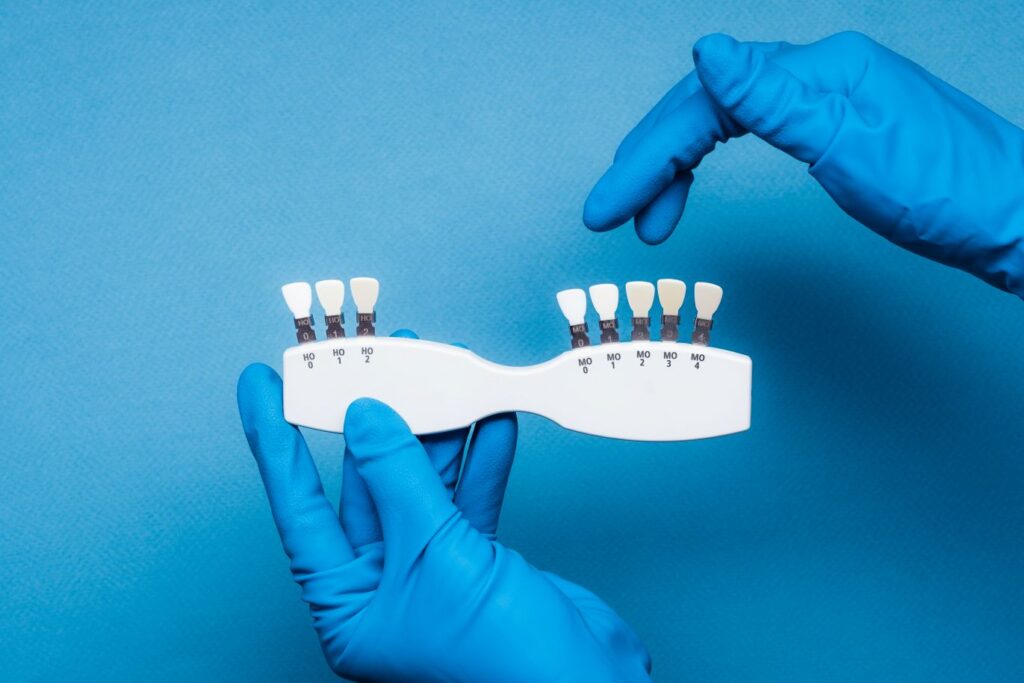
One key benefit of porcelain veneers lies in their appearance. Modern porcelains use layered colours that reflect light in a similar way to enamel. This technique usually gives a realistic, subtle result rather than an overly bright, artificial look.
Porcelain resists everyday staining from coffee, tea, red wine and smoking better than natural enamel and some filling materials. When your dentist plans the case carefully, porcelain veneers can offer a conservative option that preserves more tooth tissue than full crowns yet still changes shape and colour significantly.
Customisation also counts as a major advantage. Your dentist designs each veneer to match your facial proportions, lip line and gum contour. This approach aims for a balanced smile rather than a copy of someone else’s teeth. With the right case selection, good oral hygiene and regular check-ups, porcelain veneers can stay functional and attractive for many years.
Porcelain veneers vs other options
Sometimes porcelain veneers are only one of several solutions. Understanding the differences can help you decide more clearly.
Porcelain veneers vs composite veneers
With composite veneers, the dentist builds up tooth-coloured resin directly on your teeth. With porcelain veneers, a dental technician fabricates thin ceramic shells in a laboratory, and your dentist then bonds them to the teeth.
Porcelain usually offers greater colour stability, surface gloss and durability. Composite often costs less and your dentist can repair it more easily if it chips.
Simple comparison:
| Feature | Porcelain veneers | Composite veneers |
|---|---|---|
| Material | Ceramic / porcelain | Tooth-coloured resin |
| Aesthetics | Very natural, stable colour and shine | Good; may stain more over time |
| Durability | High; can last many years | Lower; more prone to wear or chipping |
| Tooth removal | Minimal to moderate | Often minimal |
| Typical cost per tooth* | Higher | Lower |
*Costs depend on the case, materials and region.
Porcelain veneers vs teeth whitening
Teeth whitening lightens your existing enamel. It does not change the shape, close gaps or rebuild worn edges. Porcelain veneers can change both colour and shape at the same time. They can also cover deep stains that bleaching alone cannot shift.
In some treatment plans, your dentist whitens the other teeth and places veneers on a few key teeth. This combination can give a balanced, natural result.
Porcelain veneers vs crowns
Crowns surround the entire tooth and dentists often recommend them when a tooth is heavily filled, cracked or structurally weak. Veneers usually cover only the front surface. If a tooth remains strong but looks stained or misshapen, a veneer may offer a more conservative option. If a tooth is very weak or broken down, a crown may protect it better.
What to expect from the porcelain veneers procedure
When you know the steps, porcelain veneers often feel calmer and more predictable.
The process in simple steps
- Consultation and smile goals
- Smile design preview
- Tooth preparation visit
- Veneer fitting and bonding
- Aftercare and regular reviews
Consultation and smile goals
At your first visit, the dentist talks with you about what you would like to change. They examine your teeth, gums and bite. They may take photos and X-rays to assess tooth and bone health. You usually discuss several options, including treatments that do not involve veneers.
Smile design preview
If veneers seem suitable, your dentist may move to a smile design stage. They might use digital images, wax models or temporary material on your teeth. These tools allow you to preview how your smile could look before you commit to permanent changes.
Tooth preparation visit
When you decide to go ahead, your dentist schedules a preparation appointment. They gently reshape a thin layer of enamel from the front and edge of each tooth that will receive a veneer. This creates space so the porcelain does not look bulky.
The dentist then takes impressions or digital scans and sends them to a dental laboratory. They place temporary veneers or a “trial smile” so you can test the look and feel in everyday life.
Veneer fitting and bonding
At the fitting visit, your dentist removes the temporary veneers. They try in each porcelain veneer and check the fit, bite and colour in natural light. When you both feel happy with the result, the dentist cleans the teeth and bonds the veneers in place using strong adhesive.
They remove any excess cement, recheck your bite and polish the veneers. Most people eat and speak normally soon afterwards, although your dentist may suggest softer foods on the first day.
Aftercare and regular reviews
After placement, your dentist gives you tailored advice on cleaning around your veneers. They also talk about habits to avoid, such as biting fingernails, chewing ice or using teeth to open packets. If you grind or clench at night, they may recommend a protective night guard.
Regular check-ups allow the dentist to monitor your veneers, the teeth underneath and your gums over time.
When should I see the dentist?

You may wish to arrange an assessment if you avoid smiling in photos or feel self-conscious about stained or worn front teeth. An assessment also helps if you tried whitening but did not feel satisfied, or if old bonding or fillings on front teeth keep breaking or staining. You might simply feel curious about whether veneers could help you.
You should seek prompt dental advice if you feel sudden pain or sensitivity in a front tooth. Contact your dentist quickly if a veneer feels loose or rough, or if your gums around possible veneer teeth look swollen, bleed or feel tender. Early assessment usually allows more conservative and comfortable treatment.
Risks & limitations of porcelain veneers
Every dental treatment carries risks and limitations, and porcelain veneers follow this rule. Understanding these points helps you make an informed choice.
You may notice temporary sensitivity to hot or cold after tooth preparation or bonding. This sensitivity usually settles within days or weeks, although it can feel uncomfortable at first. Porcelain is strong, yet it can still chip or crack if you bite hard objects, suffer a blow to the mouth or grind heavily. Your dentist can often polish or repair small chips; larger fractures may require a new veneer.
Sometimes a veneer may debond and come away from the tooth. If the porcelain remains intact, your dentist may clean it and bond it again. Poor cleaning around veneer edges or poorly shaped restorations can irritate the gums, so daily care and professional cleaning play a key role.
The most important limitation is that reshaping enamel is irreversible. Once your dentist prepares a tooth for a veneer, that tooth will usually need a veneer or another type of restoration for life. Veneers also have functional limits. They do not correct severe crowding or major jaw problems and they rely on healthy gums and bone. Smoking, uncontrolled grinding and poor oral hygiene can shorten their lifespan.
How long do porcelain veneers last?
No one can guarantee how long porcelain veneers will last. Research suggests that well-planned veneers can perform successfully for many years. Many people keep their veneers for around ten years or longer, and some for much longer, especially when they attend regular check-ups and care for their teeth at home.
Longevity depends on several factors. These include the number of teeth treated, your bite, any grinding or clenching habits, the quality of your oral hygiene and lifestyle habits such as smoking or chewing very hard foods. Occasional repair or replacement is normal over a lifetime and your dentist should discuss this before you start treatment.
Caring for your porcelain veneers
Day-to-day care for porcelain veneers looks very similar to caring for natural teeth. A few simple habits make a big difference:
- Brush twice a day with a soft toothbrush and fluoride toothpaste, paying attention to the gumline.
- Clean between your teeth every day using floss or interdental brushes.
- Avoid using your teeth to open packets or bite very hard items such as ice or hard sweets.
- If you grind or clench, wear the night guard your dentist recommends.
- Attend regular check-ups and professional cleanings so your dentist can spot any issues early.
Porcelain itself does not decay, but the tooth underneath can. Consistent cleaning and professional care remain essential.
Cost of porcelain veneers
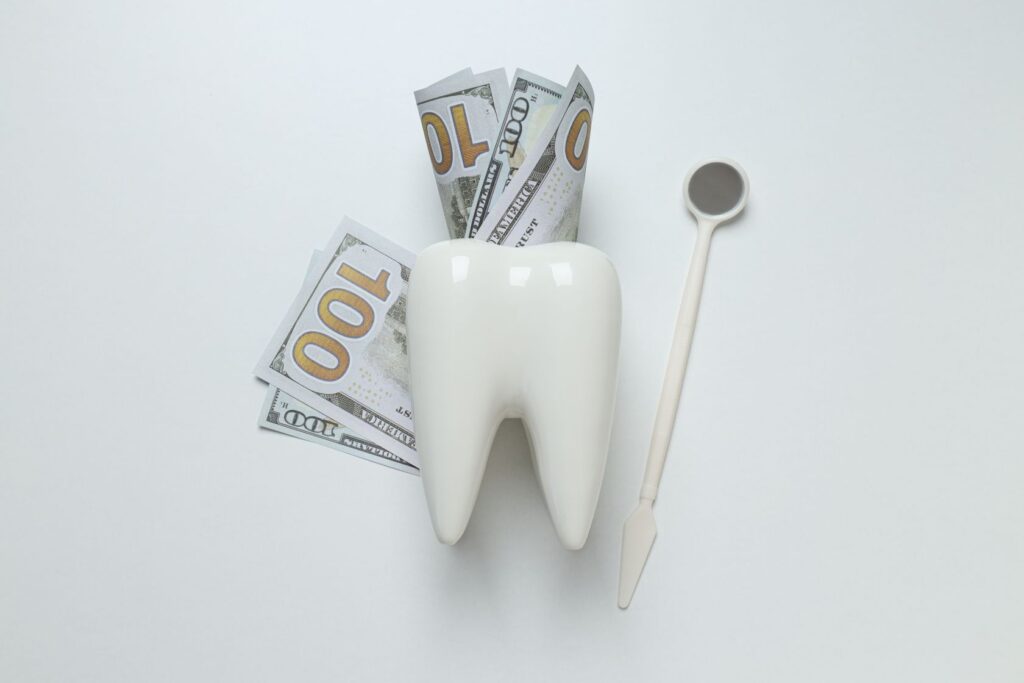
The cost of porcelain veneers varies widely between patients and countries. Factors include how many teeth you treat, the complexity of your bite, the type of porcelain and the laboratory work involved. Additional treatments such as whitening, gum contouring, orthodontics or composite bonding can also affect the overall fee.
After a full examination, your dentist should give you a written treatment plan. This plan outlines the recommended steps, estimated fees and number of visits. Some practices offer staged treatment or payment plans. It is reasonable to take time, compare options and ask questions before you commit to any cosmetic treatment.
Porcelain veneers: before & after expectations
Before-and-after photographs can inspire you, but they only show part of the story. Every mouth is unique. Your starting tooth colour, shape, gum levels, bite and the number of veneers all influence the final result.
In general, veneers can improve brightness, symmetry and tooth proportion. They can make teeth appear more aligned and restore worn edges. Small differences between teeth, gums and lips remain normal and often keep a smile looking natural. Your dentist should explain what you can realistically expect in your specific situation and how your result may differ from examples you see online.
Frequently asked questions
Book your porcelain veneers consultation
If you wonder whether porcelain veneers could help you feel more at ease with your smile, a calm consultation is the next step. During this visit, a qualified dentist listens to your concerns, examines your teeth and gums and explores all suitable options, not just veneers.
You should leave with a clear plan, an honest discussion of benefits and limitations, and an outline of costs and timings. You never have to proceed straight away. The goal is simply to understand your choices and decide, at your own pace, what feels right for you.