By HollywoodSmiles.net Team | Updated on January 27, 2026
If you’ve been scrolling smile makeover photos, it can start to feel like there’s a “correct” number of veneers. In real life, it doesn’t work that way.
The right number depends on three things:
- How many teeth show when you smile and talk (your smile width)
- The health and strength of each tooth (fillings, cracks, wear, root canals)
- Your bite and habits (especially clenching or grinding)
This is general education, not personal medical advice. A dentist has to evaluate your teeth, gums, and bite in person to recommend the safest plan.
The quick answer
Most veneer makeovers land in one of these starting points:
- 4 veneers: small, localized fixes
- 6 veneers: the classic “front smile” zone for many people
- 8–10 veneers: wider smiles, bigger symmetry and shade changes
You’ll also see 16–20 advertised as “full smile” packages. That can be appropriate in select cases, but it’s not automatically better.
4 veneers: small fixes
Best for: one or two front teeth that need aesthetic help, while the rest of your teeth already look good.
Four veneers usually cover the most visible upper front teeth (often the incisors). This can work well if you’re dealing with:
- A small chip or uneven edge
- One darker tooth that doesn’t match (for example after a root canal)
- Minor spacing (like a small gap)
- Slight shape mismatch on a couple front teeth
The catch: if you show a wide smile, 4 can leave a visible transition where veneers end and natural teeth begin (patients often call this the “veneer line”).
4 veneers tends to look best when your goal is:
“Make these few teeth match the rest,” not “Change my whole smile.”
6 veneers: the classic “smile zone” for many people
Best for: a natural-looking upgrade that covers what most people show in everyday smiling and conversation.
Six veneers typically include the front six upper teeth: the four incisors plus the two canines.
This is a common choice if you want:
- Brighter, more even teeth (without going ultra-white)
- Better symmetry and smoother edges
- A balanced shape change (short teeth, narrow teeth, uneven lengths)
- A noticeable improvement that still looks “like you”
Where 6 can fall short:
If your premolars show when you laugh, six can stop too early, and the side teeth can look darker or more worn in photos.
8–10 veneers: wider smiles, more symmetry, bigger shade change
Best for: broad smiles, high-contrast makeovers, and the most seamless “blended” look.
If you naturally show premolars (the teeth behind the canines), then stopping at six can create that “front row is perfect, sides are different” effect. As a result, people with wider smiles often extend treatment further back to keep the blend seamless:
8 veneers (adds the first premolars)
10 veneers (adds the second premolars for a wider blend)
This range is also common when you want a bigger shade jump (for example, going from deep yellow/grey tones to a much brighter shade). Matching is easier when the makeover “coverage area” is wider.
Pros of 8–10:
- Less risk of a visible cutoff point
- More control over symmetry across the full smile line
- Smoother shade transitions and more “photo-ready” consistency
Cons of 8–10:
- Higher cost
- More teeth involved, which means more margins/edges to maintain
- More planning needed to keep the result natural and not bulky
When 16–20 veneers makes sense
Some clinics advertise “20 veneers” as if it’s the premium choice (often 10 upper + 10 lower). However, it can be appropriate, but only when it solves a real problem.
It can make sense when:
there’s severe wear or erosion across many teeth, because in that situation you often need broader coverage to rebuild the smile. Similarly, if a bite reconstruction is needed, the plan may include more teeth so function and aesthetics can be rebuilt together. In addition, if there’s a major color mismatch across most of the visible teeth, treating more units can help create a smoother, more uniform shade. Finally, if you already have multiple older crowns and fillings, expanding treatment can help everything match and look updated.
It’s often unnecessary when:
your lower teeth barely show when you talk, so treating them adds maintenance without much visual benefit. Likewise, if your back teeth are healthy and not visible, adding veneers there may be over-treatment. Most importantly, if the main reason is “because it’s a package,” the plan may be driven by marketing rather than need.
Rule: a good cosmetic dentist should be able to explain why each tooth is included. If not, and the explanation is vague, that’s a red flag.
The “smile width” test
You don’t need a scan to get a helpful clue. You just need good lighting and your phone.
Step 1: Record (10–15 seconds)
Stand near a window and film a selfie video while you:
- smile normally
- laugh a little
- say “fifty-five”
Do not force an extra-wide smile.
Step 2: Pause and count
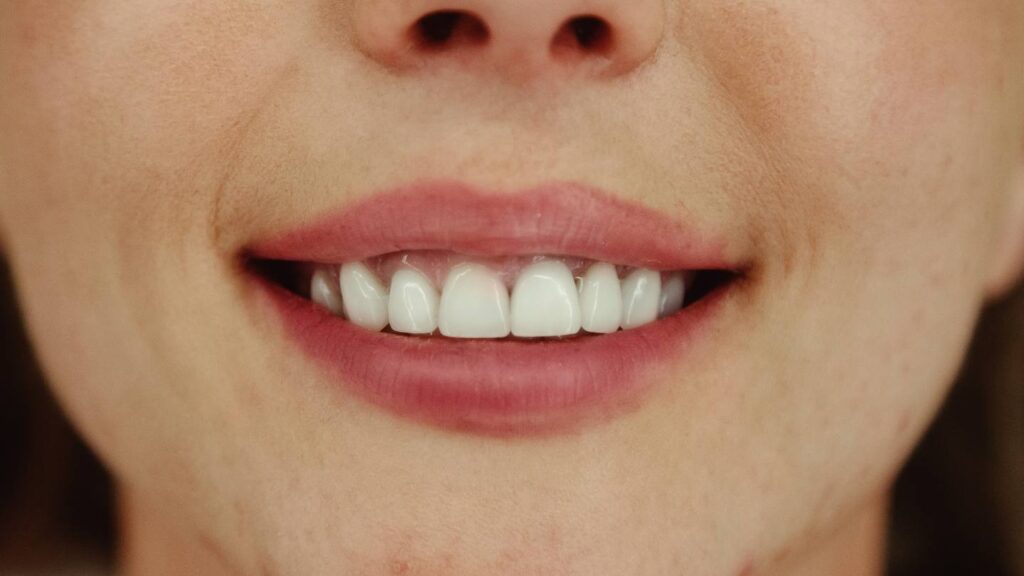
Pause at your widest natural moment. Count how many upper teeth you can see clearly from the center outward on each side:
- front teeth
- canines
- any teeth behind them that show
What it usually suggests
- If you mainly see the front teeth and canines, you often fit 4–6 veneers.
- If you clearly see teeth further back at the corners of your smile, you often look more seamless with 8–10 veneers.
Why “veneer lines” happen (and how to avoid them)
Your eyes notice transitions fast, especially in photos and bright overhead lighting.
A veneer line can show up as:
- a shade difference
- a texture/reflectivity difference (porcelain vs enamel)
- a “stop point” that lands on a tooth you show when talking
If you want a brighter shade than your natural teeth, you usually need more coverage to keep the blend looking natural.
Upper only vs upper + lower: when do the bottom teeth matter?
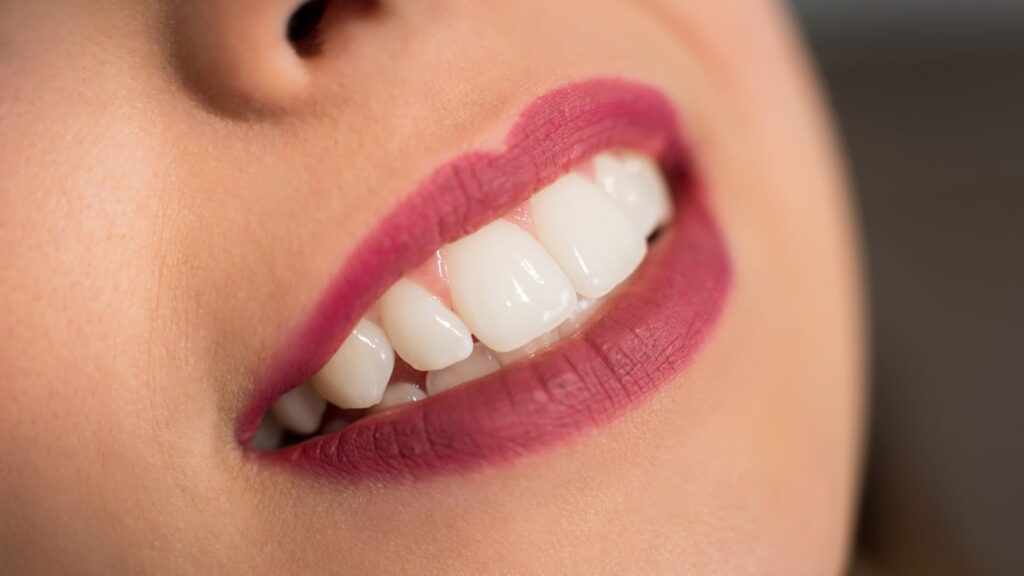
Many people get upper veneers only, because uppers dominate most smiles. Lower veneers are sometimes helpful, but they’re not always the smartest move.
Lower teeth matter more if:
- your lower teeth show clearly when you speak
- the lower front teeth are crowded, chipped, or worn
- you’re going for a much brighter shade and the lowers look very dark in comparison
In those cases, a dentist may recommend:
- lower bonding + whitening, or
- lower veneers on 4–6 teeth, carefully planned
When lower veneers can be high-risk, low-reward:
- you grind or clench
- your lower teeth are thin or heavily worn
- your bite contacts are strong on the front edges
Often the safer blend is:
- upper veneers
- whitening + small bonding on lowers
- night guard if you grind
Why “I’m Getting 8” Doesn’t Tell the Whole Story
When someone says, “I’m doing 8,” it sounds super clear. But it’s a bit like saying, “I’m renovating 8 rooms.” Cool, but are we painting the walls, rebuilding the floor, or fixing structural damage?
In dentistry, the number is just how many teeth are involved. The real plan is what type of work each tooth needs.
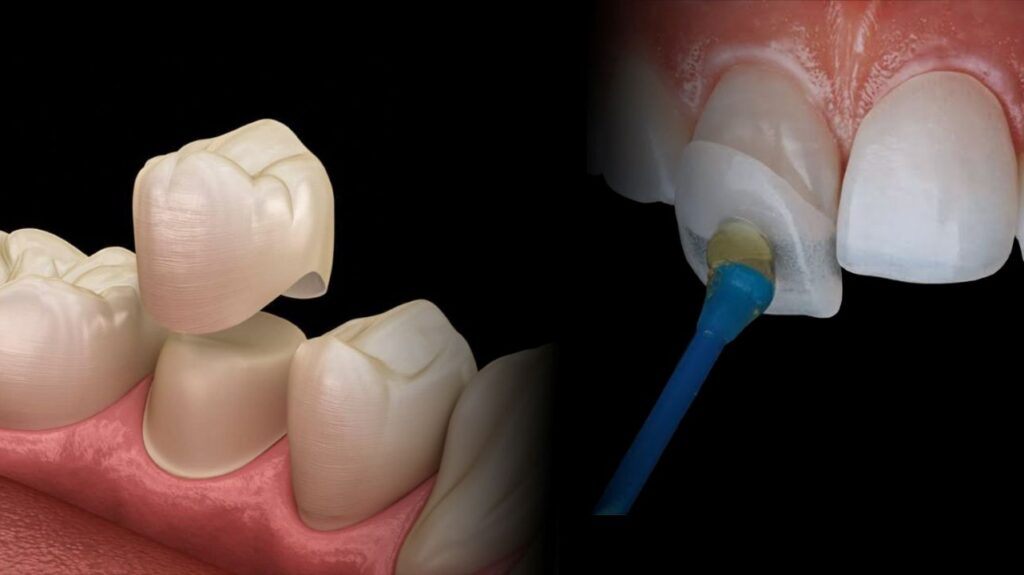
Veneers: the “make it prettier” option
Veneers are great when the tooth is healthy and you mainly want cosmetic upgrades like:
- a brighter, cleaner shade
- smoother shape or more even edges
- a little extra length
- closing small gaps
Crowns: the “this tooth needs backup” option
If a tooth is heavily repaired or fragile, a veneer can be risky. Dentists often lean toward crowns when there’s:
- a big old filling
- cracks or signs it could fracture
- heavy wear
- a root canal tooth with a lot of structure missing
Crowns cover more of the tooth, so they’re often chosen when the goal is protection, not just looks.
Bonding: the “tiny fix” option
Bonding is perfect for small touch-ups like:
- tiny chips
- slight edge reshaping
- small gaps
Sometimes bonding handles the minor stuff so you don’t have to extend veneers to extra teeth just to make everything blend.
The best question to ask in your consult:
“For each tooth, what are we doing (veneer, crown, or bonding), and why?”
The 3 mistakes that cause regret

1) Doing too few
This usually shows up when your smile is wider than you think. For example, if your premolars appear when you laugh, or if you’re aiming for a much brighter shade, then stopping at a small number can create an obvious “cutoff.” In addition, if your canines and premolars are naturally darker than your front teeth, the contrast becomes even more noticeable. As a result, the front teeth can look perfect, but the sides end up looking like a different smile.
2) Doing too many
More veneers can mean more tooth preparation, more edges to keep clean, and more restorations to maintain or replace over time. That said, if the extra teeth you’re treating are not visible when you smile or talk, then the improvement may be limited. In other words, you could be adding work and maintenance without adding much cosmetic benefit. As a result, the visual payoff may be small compared to the long-term upkeep and cost, especially if those teeth are healthy and not structurally compromised.
3) Ignoring bite and grinding (the expensive mistake)
Even beautiful veneers can chip or debond if the bite isn’t planned properly or you clench or grind. That’s why a responsible dentist will check how your teeth contact and glide, and they’ll look for wear patterns that suggest bruxism. In addition, they should discuss whether you’ll need a protective night guard after treatment. If, on the other hand, bite is never mentioned in your consult, then bring it up directly.
What to ask in a veneer consult
Screenshot this:
- How many upper teeth do I show when I talk and laugh?
- Where would the veneers stop, and will that tooth show when I smile?
- For each tooth: veneer, crown, or bonding, and why?
- What shade are we aiming for, and how will it blend with any untreated teeth?
- Can I try a mock-up / temporary trial smile before final bonding?
- How are you planning my bite to reduce chipping risk?
- Do I need a night guard if I grind or clench?
- If we do uppers only, what’s the plan for lowers (whitening, bonding, ortho, or nothing)?
- Can I see before/after photos of patients with a similar veneer count?
Final thought
The best veneer work doesn’t scream veneers. It blends with your face, your lip line, and your natural smile width.
A realistic shortcut:
- 4: small targeted correction
- 6: classic smile-zone upgrade
- 8–10: wider smiles and bigger shade/symmetry change
- 16–20: only when function, wear, or visibility actually justify it
Sources
- Veneers overview, types, enamel removal, grinding considerations
- Dental veneers: what they are, veneer vs crown, enamel removal, stain resistance, typical lifespan
- Crowns overview and why they’re used
- Bruxism: definition, complications, mouth guard as common treatment
- Bruxism overview and risks of tooth damage