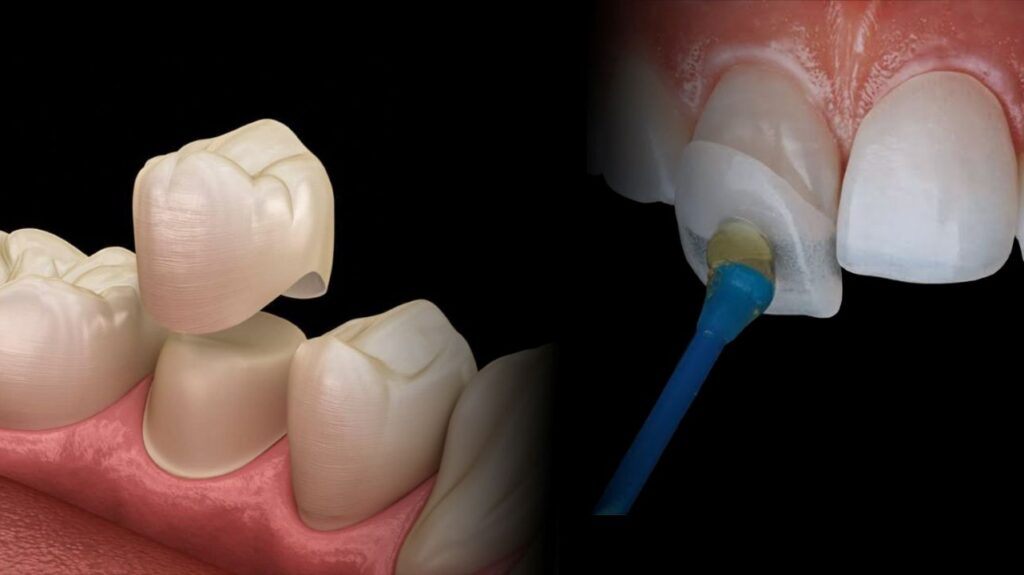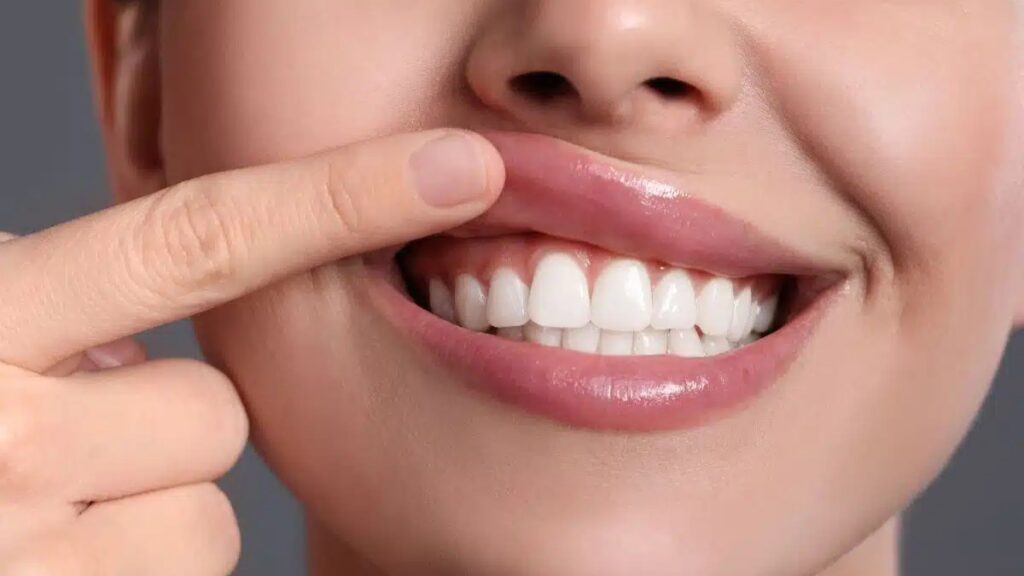
Many people ask about veneers because they want a brighter, more even smile. But teeth are only part of the picture. The gum line also matters. If the gums sit unevenly, cover too much enamel, or make the teeth look short, veneers alone may not create the balanced result you want. In some cases, gum contouring before veneers can help. In others, it is unnecessary.
What gum contouring before veneers means
Gum contouring is a small procedure that reshapes the gum line. The goal is to improve symmetry and show the right amount of tooth structure. It is often used when a patient feels their smile looks too gummy or when the gum levels do not match from tooth to tooth. On HollywoodSmiles.net, gum contouring is described as a way to gently rebalance the frame around the teeth so the smile looks more open and harmonious.
Before veneers, this matters because veneers change the visible shape and proportions of the teeth. If the gums do not match that new design, the final result can look less natural. The site’s veneers and smile design content both stress that treatment planning should consider lip line, tooth proportions, and gum contour together, not separately.
Who may need gum contouring before veneers
You may be a good candidate if your teeth look short because the gums sit low on the enamel. Even healthy front teeth can appear small or square when too much gum covers them. In that situation, reshaping the gum line may reveal more natural tooth structure before veneers are planned.
You may also need gum contouring if one side of your smile shows more gum than the other, or if a few front teeth have noticeably different gum levels. Small differences in the gums can stand out once veneers are placed, especially on the upper front teeth.
Another common reason is when you already plan to have veneers or bonding and want the gums to match the new tooth shapes. HollywoodSmiles.net explicitly notes that some patients choose gum contouring for this reason, especially when they want a more balanced smile makeover.
Who may not need it
Not every veneer case needs gum contouring. If your gums are already healthy, even, and proportionate to the planned tooth shapes, there may be no reason to add another procedure. Veneers can often move forward without touching the gum line at all.
You may also not need gum contouring if the main issue is alignment rather than the gums themselves. HollywoodSmiles.net notes elsewhere that some patients benefit from braces or aligners first, especially when straightening can improve proportions and help preserve tooth structure before veneers.
It is also important to say that gum contouring is usually not the first step if the gums are unhealthy. If there is active gum disease, inflammation, or bone loss, those problems should be treated first. Cosmetic work makes more sense on a stable, healthy foundation.
How dentists decide
A good plan starts with assessment. The dentist will usually look at how much gum shows when you smile, how long the teeth appear, whether the gum line is symmetrical, and whether the bone and soft tissues are healthy. The gum contouring page explains that this often includes photos, measurements, and X-rays before any decision is made.
The next question is whether the problem is mainly in the gums, in the teeth, or in the bite and alignment. If the gums are the issue, contouring may help. If the teeth are weak, badly worn, or heavily restored, another option such as crowns may be more appropriate. If the teeth are crowded or rotated, orthodontics may make more sense first.
HollywoodSmiles.net also makes a useful distinction between gum contouring and crown lengthening. Gum contouring is mainly cosmetic and usually involves soft tissue. Crown lengthening goes deeper and may involve gum and bone, often for restorative reasons rather than simple smile design.
Gum contouring, veneers, and other options
Sometimes patients hear several terms and are not sure which treatment they actually need. A simple way to think about it is this:
| Concern | Treatment that may help most |
|---|---|
| Gums cover too much enamel | Gum contouring |
| Teeth are stained, chipped, or uneven | Veneers |
| Teeth are crowded or rotated | Aligners or braces |
| Teeth are weak or heavily damaged | Crowns or restorative treatment |
| Gums are inflamed or unhealthy | Periodontal treatment first |
That general logic matches how HollywoodSmiles.net explains treatment planning across its gum contouring, veneers, and smile process pages: start with the real cause, not just the cosmetic goal.
What to expect if gum contouring is included
On the treatment day, gum contouring is usually done with local anaesthetic. The site explains that dentists may use a soft-tissue laser or a fine surgical instrument to trim and shape tiny amounts of gum tissue. The aim is to create a smooth, consistent curve without harming the natural attachment around the tooth.
Most patients can expect mild soreness or swelling for a few days afterward. The surface tissues often settle within one to two weeks, while the final gum shape can take longer to mature. That matters because veneers should be designed around a stable gum line, not one that is still changing.
Risks and limits
Even though gum contouring is a relatively minor procedure, it still has limits. HollywoodSmiles.net lists short-term sensitivity, temporary swelling or tenderness, and the possibility of slight over- or under-correction in some cases. There can also be mild relapse while the tissues heal and remodel.
The bigger point is that gum contouring should only be done when it truly fits the case. The site repeatedly takes a careful, health-first approach. Sometimes another treatment, or even no treatment at all, is the better choice. That is especially true when expectations are unrealistic or the real problem lies somewhere else.
Bottom line
Gum contouring before veneers can make sense when the gum line is part of the problem, especially if the teeth look short, the gum levels are uneven, or the planned veneers would benefit from a better frame. It may not be needed when the gums are already healthy and balanced, or when the real issue is alignment, tooth structure, or gum disease. The safest approach is to assess the smile as a whole and choose the simplest treatment that fits both health and appearance.