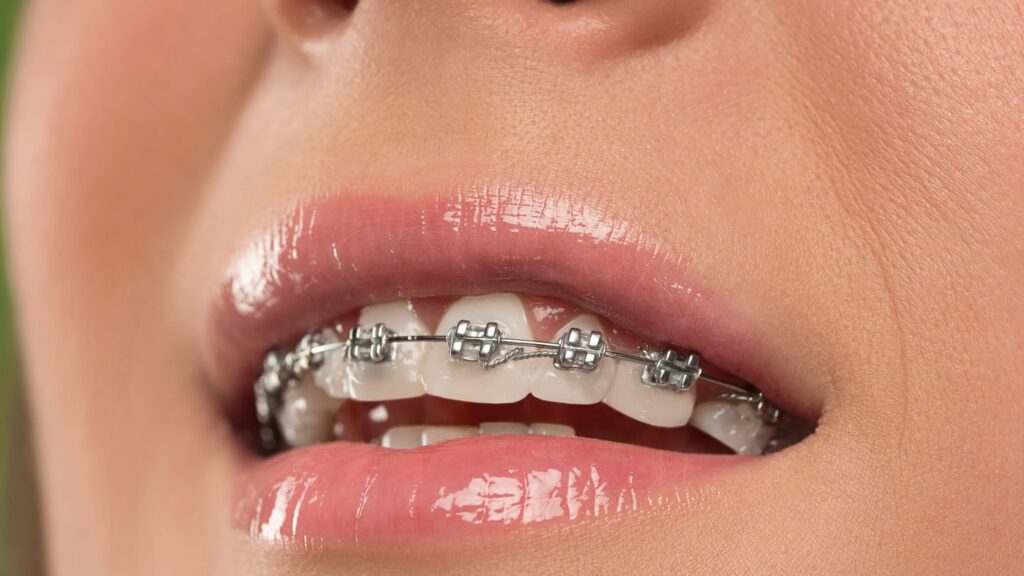
By HollywoodSmiles.net Team | Updated on February 17, 2026
Veneers can transform a smile. They can brighten teeth that do not respond well to whitening, smooth chips, and create a more even shape. Because veneers change the appearance of the front surface of teeth, many patients wonder if veneers can also replace braces or clear aligners.
Sometimes they can. But when teeth are noticeably crowded, rotated, flared forward, or the bite is uneven, straightening first often protects your teeth and improves the final result. In many cases, orthodontics is not an extra step. It is the step that helps you keep more of your natural tooth.
Veneers vs. Orthodontics: What Each One Really Does
Veneers are thin coverings bonded to the front of teeth. Their strength is cosmetic improvement: changing shape, color, and symmetry. Orthodontic treatment, whether with braces or clear aligners, moves teeth through bone into healthier positions and can improve how the bite fits together.
This difference matters. If the main concern is tooth color, small chips, or uneven edges, veneers may be the primary solution. If the main concern is tooth position, orthodontics is the treatment designed to fix it. When veneers are used to “hide” misalignment, the plan can become less conservative than patients expect.
Why Straightening First Can Protect Your Teeth
When a tooth sits out of line, a veneer has limited ways to make it look straight. One option is to build the veneer thicker to disguise the position. The other option is to reshape the tooth more aggressively so the veneer can sit in a straighter position without looking bulky. In moderate misalignment cases, either approach can mean removing more enamel than is ideal.
Straightening first often reduces that need. When you align teeth with braces or clear aligners before veneer treatment, veneers enhance the final esthetics instead of masking misalignment. This approach typically requires less tooth reduction, preserves more enamel, and improves bonding predictability because your dentist bonds veneers primarily to enamel rather than deeper tooth structure.
Bite forces are another reason orthodontics can matter. Veneers are strong, but they are not indestructible. If the bite places heavy pressure on the front teeth, or if you clench or grind, veneers may be more likely to chip, crack, or debond over time. Bringing teeth into better alignment and improving the bite can reduce stress on the final veneers and support long-term stability.
When Straightening First Is Usually the Smarter Move
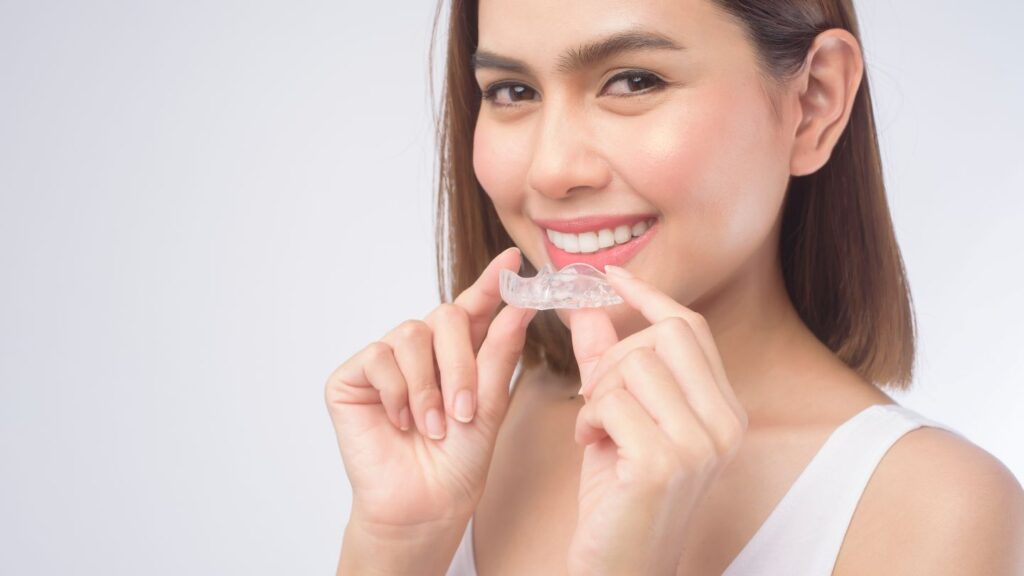
Orthodontics before veneers is often worth considering when tooth position or bite is part of the problem. This is especially true when the goal is a natural look without removing more tooth structure than necessary.
Signs that straightening first may be the safer plan include:
- Teeth that overlap, twist, or are noticeably crowded
- Front teeth that flare outward or sit too far forward
- Bite issues such as a deep bite, open bite, or crossbite that overload the front teeth
- Spacing or a midline shift that would force veneers to look too wide or uneven
This does not mean veneers are not an option. It means veneers may work best after teeth are in healthier positions.
When Veneers Alone May Be Reasonable
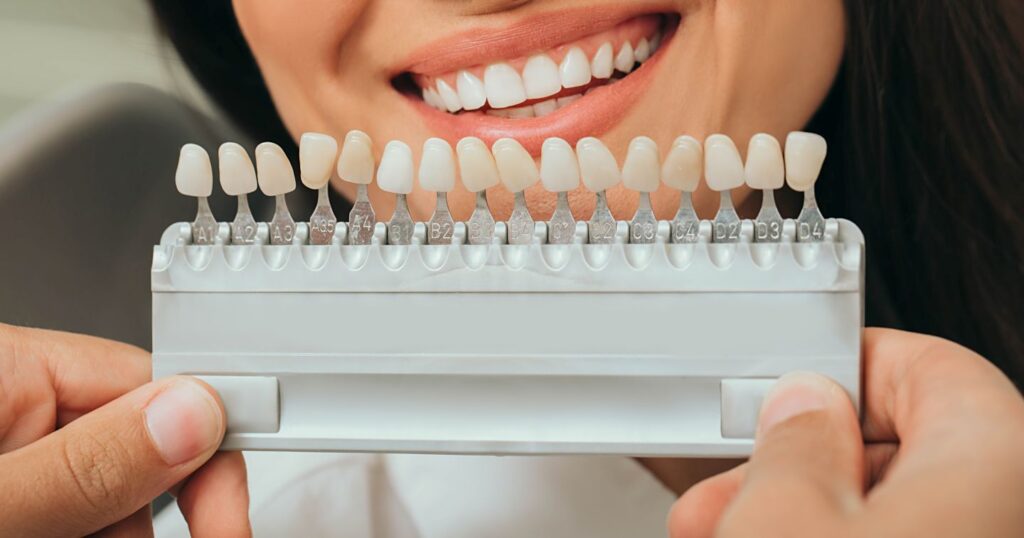
Some patients can get an excellent outcome with veneers without orthodontics. This is more likely when teeth are already fairly straight and the bite is stable, and the main goals are improving color, fixing chips, smoothing worn edges, or refining tooth shape.
In mild alignment cases, veneers can sometimes create the appearance of straighter teeth without bulky contours or aggressive reshaping. The key is careful planning and an honest preview. A quality consultation should make it clear whether veneers can achieve your goal conservatively, or whether straightening first would protect your teeth and improve the result.
Clear Aligners vs. Braces Before Veneers
Both clear aligners and braces can create the healthy, well-aligned foundation that makes veneer treatment more conservative. The right choice depends on how much movement you need, how complex your bite is, and how predictable the correction will be in your specific case.
| Factor | Clear Aligners | Braces |
|---|---|---|
| Appearance in daily life | Discreet and removable trays | Visible brackets and wires |
| Best suited for | Mild to moderate crowding or spacing | Mild to complex crowding, rotations, and spacing |
| Bite refinement | Certain bite refinements (case-dependent) | Often better for more complex bite corrections |
| Control of tooth movement | Good control in suitable cases, depends on wear time | Very precise control, especially for difficult movements |
| Rotations and difficult movements | Usually best for mild to moderate rotations | Often better for significant rotations and complex movements |
| Predictability for veneer planning | Strong when movements are within aligner limits | Often stronger when larger or more complex movements are needed |
| Main benefit before veneers | Aligns teeth to reduce drilling and over-bulking | Aligns teeth and bite for a stable, conservative veneer result |
The best option depends on your starting alignment, your bite, and how predictable the planned tooth movement is for your case. What matters most is not which tool is used, but whether tooth movement will make veneers more conservative and durable.
What a Combined Plan Usually Looks Like
A good plan starts with a full evaluation, typically including photos, a digital scan, and often X-rays. Your dentist looks at tooth position, gum health, and how your bite fits together. If straightening is recommended, the goal is to align teeth so veneers can be designed with normal, natural proportions instead of extra thickness to hide misalignment.
After braces or aligners align your teeth, retainers help maintain the results. If veneers remain the best option for your cosmetic goals, your dentist designs them as a refinement step. Many clinics pair digital smile design with a temporary mock-up so you can preview the proposed tooth shape and size before the dentist finalizes the treatment.
When veneers are placed after orthodontics, they are often used for the details patients care about most: symmetry, edge shape, small spacing refinements, and color. This approach usually produces a result that looks more naturally balanced.
Questions to Ask at Your Consultation
These questions help you understand whether straightening first will save tooth structure and improve long-term success:
- If I do veneers now, how much tooth reduction do you expect?
- If I straighten first, can we reduce or avoid drilling?
- Can you show a mock-up or preview of both options?
- Is my bite putting veneers at risk long-term?
- Would aligners be enough for my case, or do I need braces for better control?
The best plan is the one that meets your goals while keeping the teeth as healthy and conservative as possible.
The Takeaway
Veneers can be life-changing, but they work best when they are used as a finishing step, not as a substitute for tooth movement. When alignment or bite is part of the problem, braces or clear aligners first can reduce enamel removal, improve how forces hit the veneers, and help the final result look more natural.
If you are considering veneers, ask one simple question during your consultation: “If we straighten first, can we keep more of my natural tooth?”
FAQ
Sources
- American Dental Association (MouthHealthy): Veneers overview for patients
- American Association of Orthodontists: Why orthodontics matters (alignment and bite)
- Journal of Prosthetic Dentistry: Systematic review/meta-analysis on porcelain veneer survival and complications
- Dental Materials: Studies on veneer bonding strength to enamel vs dentin
Have questions about a Hollywood Smile?
Enter your phone number and we’ll call to answer general questions and explain your options.
Hollywood smile cost by country