By HollywoodSmiles.net Team | Updated on January 16, 2026
If you’ve been thinking about veneers, there’s a good chance you’ve had the same question most patients ask before they book: is it going to hurt?
Here’s the honest answer. Most veneer appointments are not “painful” in the way people imagine. With proper numbing, you usually feel pressure and vibration more than pain. Afterward, it’s normal to have a bit of sensitivity or gum tenderness for a few days. The goal is that once everything settles and your bite is adjusted, veneers should feel comfortable and natural, like they have always been part of your smile.
- The part people worry about most: numbing
- Does the tooth prep hurt?
- What about temporary veneers?
- Does bonding the final veneers hurt?
- What does recovery feel like?
- Why do veneers sometimes feel sensitive?
- What’s normal, and what should make you call the clinic?
- How to make the first week easier
- Are no-prep veneers pain-free?
- The takeaway
- FAQ
- Sources
The part people worry about most: numbing

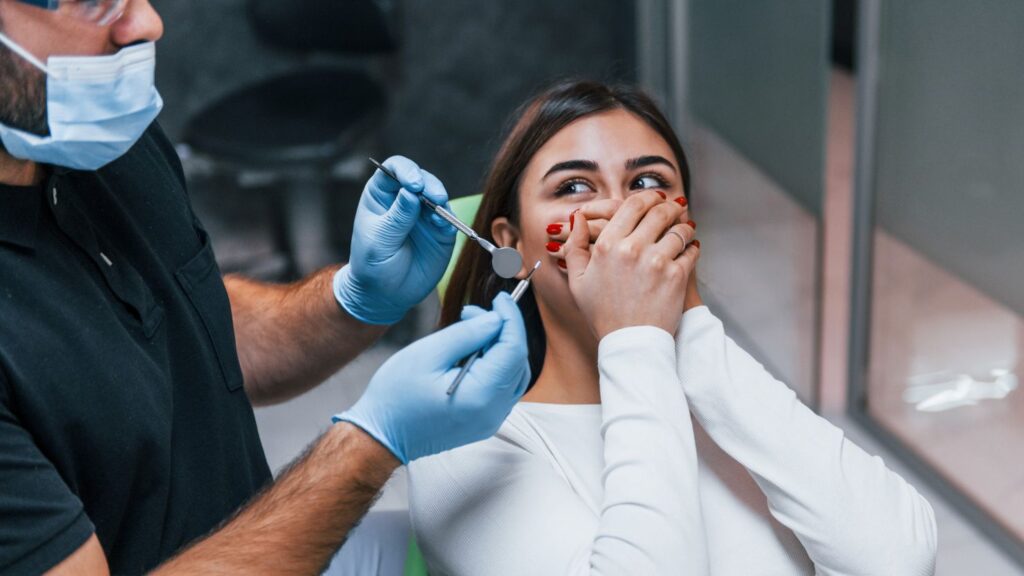
For many patients, the injection is the moment they fear. In reality, it’s usually a quick pinch and a bit of pressure, and then it’s done. We can also use a topical gel first, which helps a lot. If you’re nervous, tell your dentist before the appointment. We can slow down, give extra time for the numbing to work, and take breaks so you never feel rushed.
Once you’re numb, the appointment becomes much easier. (Local anesthesia is designed to block pain in a small area, which is why dental procedures are usually very tolerable.)
Does the tooth prep hurt?

With anesthesia, tooth preparation should not feel sharp or painful. What you might notice is the sound of the handpiece, the water spray, and that “busy” feeling in your mouth. That’s normal.
What you should not do is sit there trying to be tough if you feel anything sharp. If you feel pain, raise your hand. Sometimes a tooth just needs a little more numbing. That’s common, and it’s an easy fix.
How much enamel is removed for veneers?
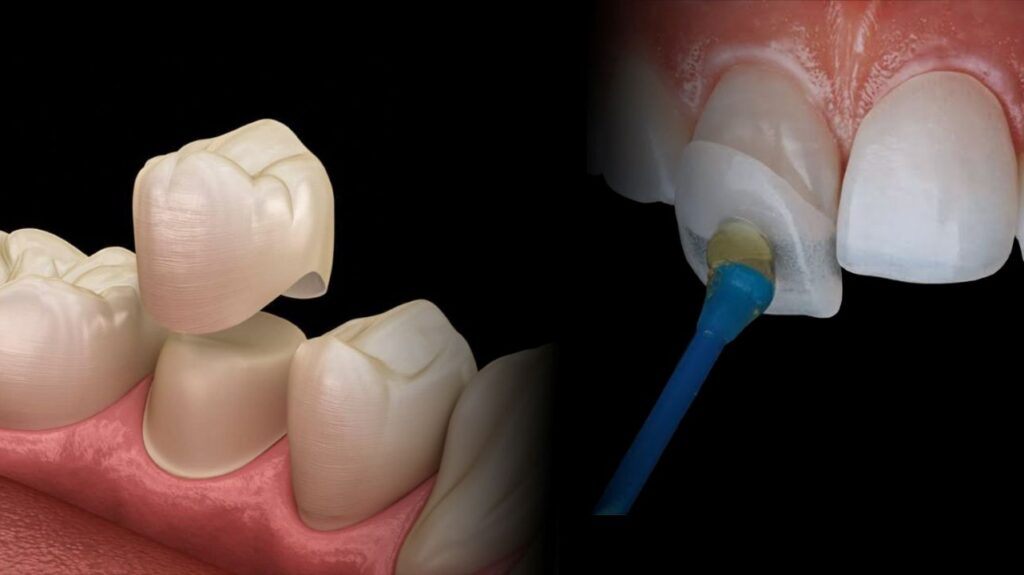
Most porcelain veneers require a small amount of enamel removal so the veneer can sit naturally without looking bulky. The amount varies by case, tooth shape, and the veneer material, but it is typically a thin layer.
What you may feel:
- During enamel reduction, you should not feel pain because the area is usually numb.
- You may notice pressure, vibration, and the sound of the dental handpiece.
Why enamel removal matters for sensitivity:
Enamel protects the deeper tooth layers. After preparation, some patients experience temporary cold sensitivity, especially if the teeth were already sensitive.
How to keep sensitivity low:
- Use a toothpaste for sensitive teeth for 1 to 2 weeks
- Avoid very cold drinks for a few days
- Ask your dentist about fluoride or desensitizing treatments if needed
What about temporary veneers?
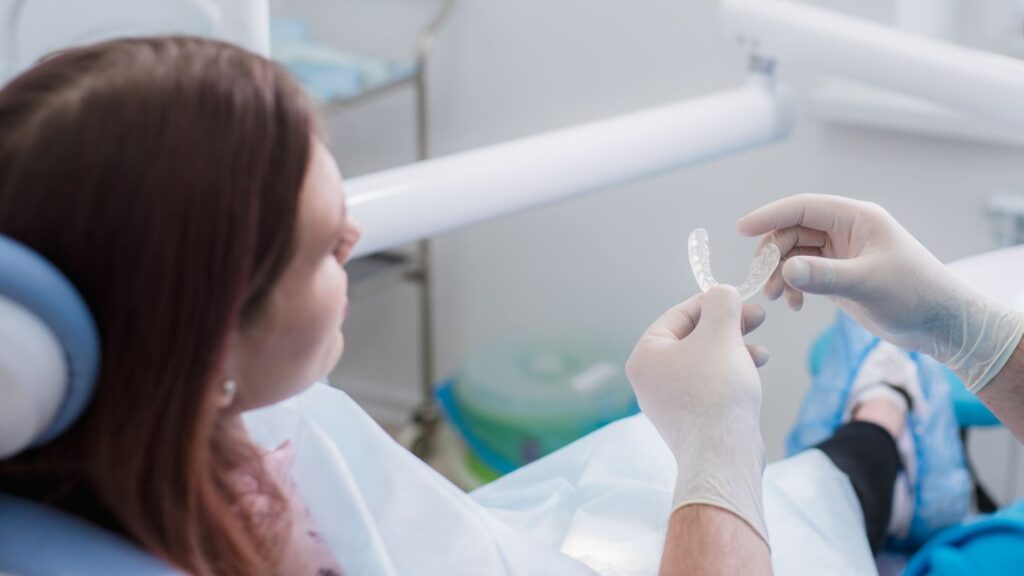
If you’re getting temporaries, this is where people can feel the most “aware” of their teeth. Temporaries can feel a little different because they are not the final material, not the final polish, and sometimes not the final shape. You might notice mild cold sensitivity, or your gums may feel a bit tender at the edges.
That does not mean something is wrong. It usually settles quickly, and once the final veneers are bonded, comfort improves.
Does bonding the final veneers hurt?
Most patients feel little to no pain during cementation. You might feel pressure while the veneer is seated, and your dentist may check your bite several times. If your gums were slightly irritated during the process, you might feel a little soreness later that day, similar to how your gums can feel after a cleaning.
What does recovery feel like?
The first 24 to 72 hours are when you might notice:
- mild sensitivity to cold drinks
- gum tenderness around the veneer edges
- a slightly “new” bite feeling
- a bit of tightness or awareness when chewing
For most people, this improves day by day. A small amount of sensitivity is common. What we want to see is that it’s trending better, not getting worse.
Why do veneers sometimes feel sensitive?
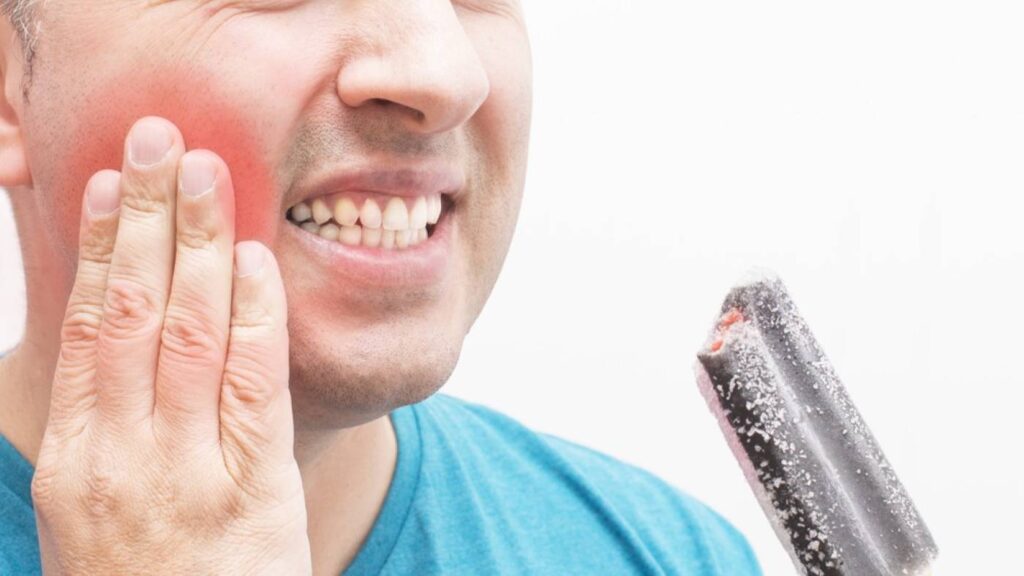
Sensitivity after veneers usually happens for a simple reason: the tooth has been worked on, and the mouth needs time to calm down.
Other common reasons include:
- the temporary phase letting temperature reach the tooth more easily
- gums being a bit inflamed from moisture control and fitting
- a slightly high bite, which puts extra pressure on one tooth
- grinding or clenching, especially at night
Tooth sensitivity can happen when enamel wears down or when the inner tooth layer is more exposed, and sometimes it points to an underlying issue (like gum disease, cavities, or a crack), so it’s worth checking if it’s persistent.
That “high bite” issue is a big one. Even a tiny difference can make a tooth feel sore when you chew. The good news is that a quick bite adjustment often solves it immediately.
What’s normal, and what should make you call the clinic?
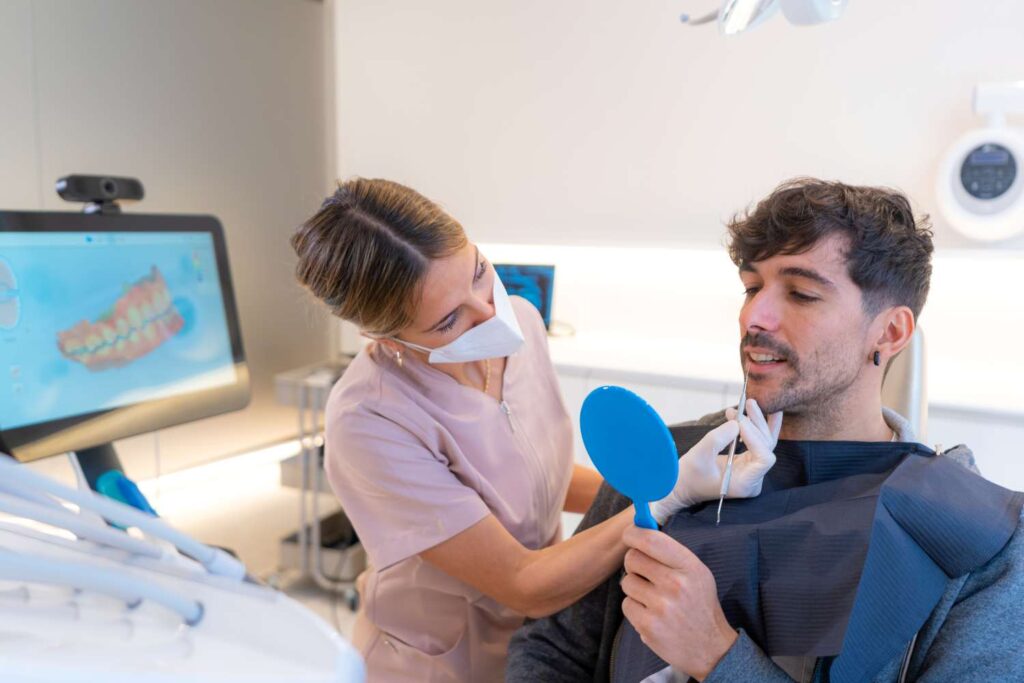
A little sensitivity to cold that improves over a few days is normal. Mild gum soreness is normal. Feeling like you need a few days to get used to the veneers is normal too.
What’s not normal is pain that keeps escalating or feels intense and lingering.
Call the clinic if:
- pain wakes you up at night
- sensitivity to heat lingers
- the bite feels so high you cannot chew comfortably
- swelling, a bad taste, pus, or fever shows up
- you have one specific spot that hurts every time you bite
Those symptoms do not always mean something serious, but they do mean you should be checked. A small adjustment or quick evaluation can prevent a bigger issue. (For example, dental abscess symptoms can include severe pain, swelling, fever, and a bad taste.)
How to make the first week easier
For the first couple of days, keep it simple. Softer foods help. Try not to bite directly into very hard foods with the front teeth. If cold drinks bother you, skip the icy stuff for a bit.
If your gums feel tender, warm saltwater rinses can help. Brush gently at the gumline, but do not avoid it. Healthy gums settle faster.
If you clench or grind, a night guard can make a huge difference. Many veneer problems that people call “pain” are really bite stress from grinding. Bruxism is common, and a custom mouth guard is a common treatment approach.
Are no-prep veneers pain-free?
No-prep or minimal-prep veneers can be more comfortable during treatment, because less tooth structure is touched. But they are not a fit for everyone. When someone is not a good candidate, “no-prep” can lead to bulky veneers, gum irritation, and bite issues. The best plan is the one that’s conservative and also stable long-term.
The takeaway
Most veneer cases are very manageable from a comfort standpoint. With good numbing, careful technique, and proper bite adjustment, patients typically describe the experience as “easier than I expected.”
If you’re worried about pain, you don’t need to guess. A consultation can tell you:
- whether you’re a good candidate
- how much prep (if any) would be needed
- how to reduce sensitivity risk
- whether you should plan for a night guard
If you’d like, book a consultation and we’ll talk through the most conservative plan for your smile and what recovery would look like for you.
FAQ
Have questions about a Hollywood Smile?
Enter your phone number and we’ll call to answer general questions and explain your options.