If you have been searching “Hollywood smile Turkey vs Morocco,” you are probably at the stage where you have seen quotes from both countries and are trying to figure out which one actually makes more sense for you: not just on price, but on quality, logistics, and long-term results.
This article gives you a direct, honest comparison. Both countries are legitimate options. But they are not equal in every area, and by the end of this page you should have a clear answer for your specific situation.
Last reviewed: 06/06/2026
- What a "Hollywood smile" actually involves
- Why the total trip cost matters more than the per-tooth price
- Quality, materials, and lab standards: how they compare
- Turkey vs Morocco: the full comparison table
- Where Turkey has the clear advantage
- When Morocco makes more sense
- The verdict: which country should you choose?
- Quote-comparison checklist (use this before booking anything)
- FAQ
What a “Hollywood smile” actually involves
Before comparing countries, it helps to be clear on what you are actually buying: because “Hollywood smile” means different things at different clinics in both Turkey and Morocco.
In most cases, the goal is a combination of:
- Brighter shade matching veneers to a chosen white, or whitening natural teeth first
- More even shape and length leveling edges, closing small gaps, improving symmetry
- Consistent appearance across the visible upper: and sometimes lower: teeth
Not everyone needs veneers. If your teeth are healthy and alignment is fine, professional whitening may be all you need. If you have minor chips or small gaps, composite bonding is a more conservative and reversible option. Ceramic veneers are the right choice when you want a significant, lasting transformation in both color and shape across multiple teeth.
This distinction matters when comparing prices: a clinic quoting “Hollywood smile from $X” for whitening and a clinic quoting for 10 E.max veneers are not offering the same thing.
Hollywood smile costs: Turkey vs Morocco side by side
Turkey: price table (USD)
| Treatment component | Typical price in Turkey | Unit |
| Consultation | Free to $50 | per visit |
| Composite veneer / bonding | $80 to $150 | per tooth |
| Porcelain veneer (E.max or similar) | $150 to $350 | per tooth |
| Zirconia veneer | $120 to $280 | per tooth |
| Professional whitening | $150 to $400 | per treatment |
| Zirconia crown (full coverage) | $120 to $300 | per tooth |
| Dental implant (if needed) | $600 to $1,200 | per implant |
| Invisalign (full treatment) | $2,000 to $5,000 | full treatment |
Typical full smile makeover (8–10 upper teeth, E.max veneers): $1,200 to $3,500 total. All-inclusive packages with hotel and airport transfer are commonly marketed in the $1,500 to $4,000 range.
For a deeper country-specific breakdown, see our full guide to Hollywood smile cost in Turkey, including veneer, crown, whitening, and package price ranges.
Morocco: price table (MAD)
| Treatment component | Typical price in Morocco | Unit |
| Consultation | 200 to 500 MAD | per visit |
| Composite veneer / bonding | 800 to 1,500 MAD | per tooth |
| Ceramic veneer (E.max, zirconia systems vary) | 2,500 to 8,000 MAD | per tooth |
| Professional whitening | 1,500 to 4,000 MAD | per treatment |
| Zirconia crown (full coverage) | 2,500 to 4,000 MAD | per tooth |
| Dental implant (if needed) | 7,000 to 12,000 MAD | per implant |
| Invisalign (full treatment) | 25,000 MAD+ (simple) / 30,000–40,000 MAD (full) | full treatment |
Typical full smile makeover (8–10 teeth): 12,000 to 50,000 MAD (roughly $1,200 to $5,000 USD depending on materials and number of teeth).
For a deeper country-specific breakdown, see our full guide to Hollywood smile cost in Morocco, including veneer, crown, whitening, and package price ranges.
Why the total trip cost matters more than the per-tooth price

A common mistake when comparing Turkey and Morocco is focusing only on the veneer price per tooth and ignoring everything around it.
The real comparison is: veneer cost + flights + accommodation + time off work + potential return trip.
For a patient flying from the UK, France, or Germany:
- Flights to Istanbul and Casablanca are often in a similar price range
- Accommodation in both cities covers a wide range of budgets
- Turkey typically requires 5–7 days for a full veneer treatment; Morocco may allow more flexibility for patients who can return for follow-ups more easily
When you do the full math, the two countries often land in a similar total cost bracket for European patients. Turkey’s edge on per-tooth price is real, but it is not always dramatic enough to be the deciding factor on its own. What tips the balance is everything else: infrastructure, materials, coordination, and peace of mind.
If you want a quick estimate before comparing clinic quotes, you can also use our Hollywood smile cost calculator to understand how veneers, crowns, implants, and whitening can affect the total price.
Treatment options available in both countries
1) Whitening
The most conservative option. Best when teeth are healthy and the main concern is shade. Leaves natural teeth intact. Available at clinics in both countries.
2) Composite bonding (composite veneers)
Good for minor chips, small gaps, and subtle reshaping without significant enamel removal. More affordable per tooth than ceramic, but can stain over time and may need touch-ups. Available in both countries.
3) Porcelain veneers (E.max or similar)
The most popular choice for Hollywood smile patients. Strong aesthetics, good durability, bonded to the front of the tooth with minimal preparation. Widely available in Turkey; available in major Moroccan cities.
If veneers are the main treatment you are considering, our dental veneers guide explains how veneers work, when they may be suitable, and what to ask before choosing a clinic.
4) Zirconia veneers or crowns
Recommended for patients with heavy bite forces, bruxism, or teeth needing more extensive coverage. Extremely strong and fracture-resistant. Turkey has a significant advantage here in terms of lab access and pricing.
5) Clear aligners (Invisalign or similar)
Useful when misalignment is the primary issue. Straightening first can reduce how many veneers are needed. Available in both countries, though follow-up logistics are easier for patients staying locally.
6) Implants (if needed)
If any teeth are missing, implants may be part of the plan. Turkey is one of the most price-competitive markets globally for dental implants: often 50–70% below Western European rates.
Quality, materials, and lab standards: how they compare
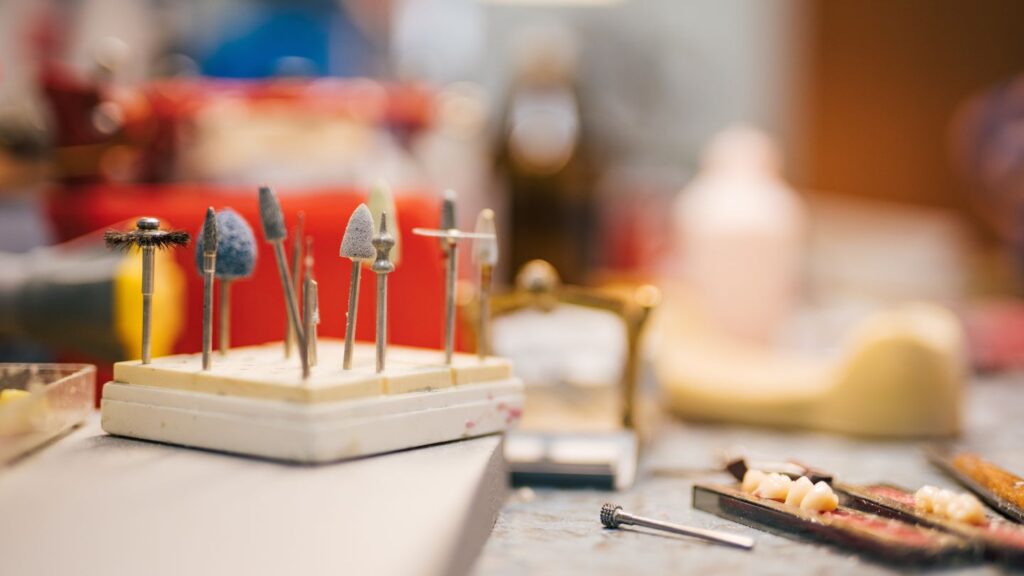
This is where Turkey pulls ahead most noticeably.
Turkey’s advantages:
- A large, competitive dental tourism market has pushed many clinics to invest in modern equipment: CAD/CAM milling, digital smile design, intraoral scanners
- Wide access to ceramic systems including German and Italian-made materials
- Some clinics are JCI-accredited or affiliated with hospital groups: a meaningful benchmark for international patients
- In-house labs at many larger clinics allow faster turnaround and better communication between dentist and ceramist
Morocco’s position:
- Reputable clinics in Casablanca, Marrakech, and Rabat use quality materials and have trained prosthodontists
- The dental tourism ecosystem is smaller and less standardized, which means more variability between clinics
- Fewer clinics offer the same level of all-inclusive coordination that has become standard in Istanbul
Neither country guarantees quality automatically. In both places, the difference between a great result and a poor one comes down to the specific clinic and dentist. But Turkey’s larger, more competitive market gives international patients more vetted options to choose from.
Risks and trade-offs every patient should know
The clinical risks of veneers are the same regardless of country. A systematic review estimated that porcelain laminate veneers have approximately a 95.5% cumulative survival rate at 10 years, with failures most commonly linked to fracture, debonding, secondary caries, or the need for endodontic treatment.
Key risks to understand:
- Irreversibility: if enamel is reduced, a restoration is typically needed for life
- Chipping, fracture, or debonding: especially in patients with bruxism
- Gum irritation if margins are poorly contoured
- Maintenance: repairs and eventual replacement are part of the long-term picture
Bruxism matters in both countries
If you grind or clench your teeth, veneer fracture risk rises significantly. A good treatment plan: in Turkey or Morocco: should include bite evaluation and a night guard recommendation. Do not skip this.
Dental tourism risks that apply everywhere
- Limited follow-up: if something breaks after you return home, local repairs can be costly and complicated
- Short treatment timelines: 5–7 days is achievable but may not suit complex cases
- Lab quality varies: always ask which ceramic system and which lab will be used
- Communication: confirm the clinic has fluent speakers of your language, and get a written treatment plan before any work begins
Turkey vs Morocco: the full comparison table
Here is how the two countries compare across the factors that matter most to international patients planning a dedicated smile makeover trip.
| Factor | Turkey | Morocco |
| Veneer price per tooth (ceramic) | $150 – $350 USD | ~$240 – $780 USD (2,500 – 8,000 MAD) |
| Full smile makeover (8–10 teeth) | $1,200 – $3,500 USD | ~$1,200 – $5,000 USD |
| Implant price | $600 – $1,200 per implant | $700 – $1,200 per implant |
| Material range | Very wide (E.max, zirconia, German ceramics) | Good; varies by city and clinic |
| Lab standards | High at top-tier clinics; in-house labs common | Varies; fewer in-house labs |
| International accreditation (JCI) | Available at higher-tier clinics | Less common |
| English accessibility | Strong at tourist-facing clinics | Limited; French/Arabic primarily |
| Dental tourism infrastructure | Very developed; hundreds of international-facing clinics | Growing; smaller ecosystem |
| All-inclusive packages | Very common (hotel, transfer, coordinator) | Less standardized |
| Flight access from Europe | Excellent (Istanbul is a major hub) | Excellent (Casablanca, Marrakech, Rabat) |
| Treatment timeline | Typically 5–7 days | Flexible if visiting multiple times |
| Insurance reimbursement | Cosmetic work generally not covered | Veneers/whitening generally not reimbursed |
On paper, the price ranges overlap more than most patients expect. Where Turkey consistently pulls ahead is not just cost — it is the combination of material access, clinic infrastructure, and all-inclusive coordination that makes the overall experience more predictable for someone traveling from abroad.
Where Turkey has the clear advantage
Turkey is the stronger choice when:
- You want the best price-to-quality ratio on ceramic veneers. At the mid-tier, Turkish clinics with modern equipment and imported ceramics are hard to beat on value.
- You need implants. Turkey’s implant pricing is among the most competitive in the world.
- You want a coordinated, all-inclusive experience. Istanbul has a mature dental tourism infrastructure: clinics that handle flights, hotels, transfers, and language support as a single package.
- Your case is complex. Access to JCI-accredited clinics, in-house labs, and multiple specialists under one roof gives Turkey a meaningful edge for multi-procedure cases.
- You speak English. Most international-facing clinics in Istanbul have English-speaking teams. Morocco’s primary languages are Arabic and French.
- You want a wide selection to compare. Istanbul alone has dozens of well-reviewed, internationally oriented clinics: giving you more options to vet and compare before committing.
When Morocco makes more sense
Morocco is a reasonable choice when:
- You already live in or near Morocco, or are visiting for other reasons: making the logistics effortless
- You speak French and feel more comfortable with a French-speaking dental team
- You want to spread treatment across multiple short visits without long-haul flight costs
- You prefer a less commercially packaged environment and want a more traditional patient-dentist relationship
Morocco is not a bad option: it is simply a better fit for a specific type of patient. For someone making a dedicated international trip to get their smile done, Turkey offers more.
The verdict: which country should you choose?

For most international patients making a dedicated trip for a Hollywood smile, Turkey is the stronger choice.
The combination of competitive pricing, wide material access, mature dental tourism infrastructure, English-speaking clinics, and all-inclusive packages makes Turkey: and Istanbul in particular: the more practical and reliable destination for the majority of patients coming from Europe, the Middle East, or further afield.
Morocco is a genuine option for patients with local ties, a French-language preference, or those combining dental work with an existing visit. But if you are flying specifically to transform your smile and you want the best overall experience: quality, coordination, value, and peace of mind: Turkey comes out ahead.
The most important factor in either country remains the same: the specific clinic and dentist you choose. Do your research, get written treatment plans, ask about materials and labs, and only compare quotes that cover the same scope of work.
Quote-comparison checklist (use this before booking anything)
Whether you are getting quotes from Turkey or Morocco, make sure every quote includes the same items:
- Diagnostics: photos, X-rays, bite evaluation
- Aesthetic planning: wax-up, mock-up, or digital smile design (DSD)
- Temporaries: included or billed separately
- Material: composite vs ceramic; which ceramic system (E.max, zirconia, etc.)
- Number of teeth: upper only, upper + lower, which specific teeth
- Lab: in-house or external; domestic or imported ceramics
- Follow-up visits: how many are included
- Night guard: recommended or included, especially if you grind
- Aftercare policy: what happens if something breaks after you return home
FAQ
This article is for informational purposes. Prices shown are typical ranges and may vary by clinic, case complexity, and exchange rate. Always consult with a qualified dental professional before making treatment decisions.
Have questions about a Hollywood Smile?
Enter your phone number and we’ll call to answer general questions and explain your options.